
Introduction
Learning word families, known as «derivational morphology,» is a crucial strategy for you as an ESL learner aiming to gain fluency in legal terminology and enhance your ability to articulate complex legal concepts to professional audiences. This agile, practical, and effective approach is especially beneficial for those seeking to master legal language, allowing you to move beyond mere comprehension to achieve effective communication in professional legal contexts.
Expanding Vocabulary Efficiently
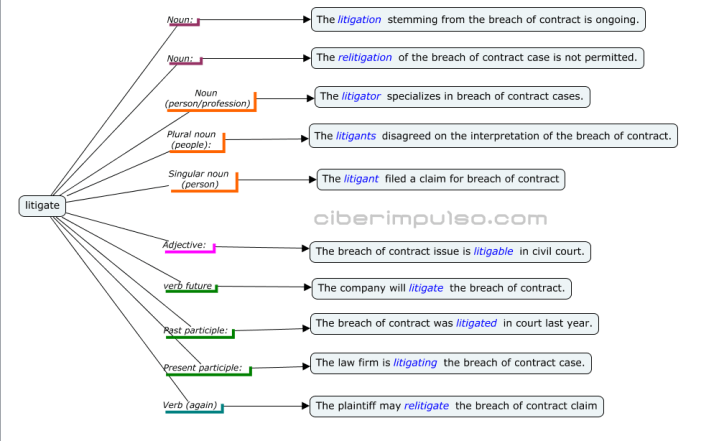
Derivational morphology helps you understand the relationships between words, enabling you to quickly grasp new legal terms. For instance, by comprehending the root «litigate,» you can easily learn related terms such as «litigation,» «litigator,» and «litigious.» This efficient vocabulary expansion is vital for sounding knowledgeable and confident in legal discussions.
Improving Grammatical Accuracy
By mastering different parts of speech within a word family, you can significantly enhance your grammatical precision. Knowing the distinction between «contract» (noun/verb) and «contractual» (adjective) improves your sentence structure in legal writing. This increased grammatical accuracy contributes to clearer and more persuasive arguments, making your communication more effective.
Enhancing Ability to Express Nuanced Ideas
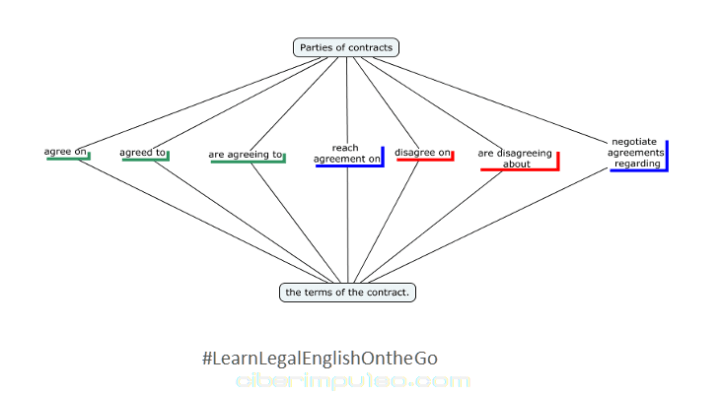
Word families provide valuable tools for you to express subtle distinctions in meaning, which are crucial in legal contexts. For example, distinguishing between «negligent» and «negligible» in tort law discussions allows you to convey precise legal interpretations. This nuanced expression is essential for engaging in high-level legal discourse.
Developing Greater Linguistic Flexibility
Understanding word families empowers you to adapt your language to various professional situations. For example, using terms like «adjudicate,» «adjudication,» or «adjudicatory» appropriately across different legal contexts enhances your linguistic flexibility. This adaptability ensures you can communicate effectively regardless of the legal setting.
Articulating Complex Legal Concepts
Derivational morphology enables you to express intricate legal ideas with clarity and precision. For instance, describing the «constitutionality» of a law versus its «constitutional» implications helps you define important legal concepts. This ability to articulate complex ideas is invaluable in legal settings, whether you’re writing briefs or arguing cases.
Describing Case Facts and Event Sequences
Word families assist you in accurately narrating legal scenarios. For example, using «prosecute,» «prosecution,» and «prosecutor» correctly helps describe criminal proceedings in a clear and professional manner. Mastering these terms is crucial for providing coherent and compelling narratives in legal discussions.
Identifying Legal Issues
Mastery of legal terminology through word families also aids you in pinpointing critical legal questions. Recognizing the difference between «liable» and «liability» in civil cases allows you to approach legal issues with a critical mindset, enhancing your analytical abilities.
Expressing and Justifying Opinions
Your derivational knowledge enhances your ability to articulate and support legal arguments effectively. Utilizing terms such as «justify,» «justification,» and «justifiable» in legal reasoning strengthens your position and aligns your arguments with legal standards, making your contributions more impactful.
Stating Positions and Agreeing/Disagreeing
Word families provide essential tools for clear positioning in legal debates. By employing «concur,» «concurrence,» and «concurrent» in judicial opinions, you can express your alignment or dissent more clearly, contributing to richer discussions and analyses.
Comparing and Contrasting
Understanding word families facilitates your analysis of legal concepts that require comparison. For instance, differentiating between «equitable» and «equity» in discussions of legal remedies allows you to engage more thoughtfully with issues of justice and fairness in law.
Speculating About Alternate Scenarios
Finally, derivational morphology supports your ability to engage in hypothetical legal reasoning. Using «hypothesize,» «hypothesis,» and «hypothetical» when analyzing cases encourages you to explore various legal scenarios, fostering creative problem-solving skills essential for effective legal practitioners.
Conclusion
Mastering derivational morphology is essential for ESL learners like you in the legal field. This approach not only expands your vocabulary but also enhances your grammatical accuracy, nuanced expression, and linguistic flexibility. By investing in this learning strategy, you can significantly improve your ability to communicate effectively and engage in sophisticated legal discourse.
Call to Action
Elevate your legal English proficiency by enrolling in our comprehensive course offering hundreds of exercises for word family and vocabulary expansion and legal terminology at Learn Legal English on The Go. Sign up today to unlock the full potential of your language skills and excel in your legal career!
 Digital Learning